Back to Forum

An Eco-Technological Ethics from China?

With the publication of the first eco-social encyclical Laudato si’ by Pope Francis in 2015, Catholic social teaching has been calling for an integral ecology that cultivates universal communion and rejects the “the dominant technocratic paradigm” (no.106-114) reflective of a modern and misguided anthropocentrism (no.115-136). Since then, Catholic theological ethicists in the world Church have produced ample literature to address the global climate crisis, facilitate a culture of encounter, and envision integral pathways to care for our common home. Explicit ethical reflection on technology – especially AI – and its intersection with ecological ethics are still emerging. In 2020, the Pontifical Academy for Life released the Rome Call for AI Ethics,[1] foregrounding the discussion of ethics in AI development. It promotes a shared sense of responsibility among international organizations, governments, institutions and the private sector to protect and serve humanity and the environment. Soon after, the AI Research Group was formed by the Dicastery for Culture and Education, gathering a group of North American theologians, philosophers, and ethicists to discuss current and future issues that AI development poses for life and society as we know it. As a result of this collaboration, Encountering Artificial Intelligence: Ethical and Anthropological Investigations was published in 2024, cautioning the environmental cost of AI development.[2] Early this year, the Dicastery for the Doctrine of the Faith and Dicastery for Culture and Education co-issued the doctrinal note Antiqua et nova, addressing the anthropological, ethical, and environmental challenges raised by AI and calling for the cultivation of the “wisdom of the heart” (no.114, 116). In explaining the choice of his name, Pope Leo XIV has expressed that the challenge of AI to human dignity, justice, and labor is a central concern for the new papacy.[3] In addition, Pope Leo XIV affirmed the commitment to environmental sustainability and the care of creation and stressed that the complex world of AI is a concern of both ethics and theology.[4]

Regardless, it is interesting to note that while the vision of integral ecology – resonating deeply with ecological wisdoms of diverse world traditions[5] – is very much shared by people of non-Western regions; the articulation of technological and AI ethics, often driven by a cautionary tale about technological innovation and its environmental cost,[6] is largely dominated by Western perspectives. Nonetheless, by appealing to the Christo-cosmic vision of the French Jesuit paleontologist, geologist, archeologist, and theologian Pierre Teilhard de Chardin, Francis opened the horizon for an alternative understanding of technology, one that does not begin from “Technology with a capital T”, but is returned to the concrete historical process and the broader evolutionary process in which technology is placed.

Quite remarkably, Teilhard’s Christo-comic vision, intimately connected with the conception of technology, was born from his over two-decades of field work in China working closely with Chinese colleagues, whom Teilhard never failed to acknowledge. For Teilhard, the planetary and ecological dimension of humankind was conceived through his geological, paleontological, and archeological work, and especially in his participation of the discovery and study of the Peking Man as the adviser to the Geological Survey of China (now China Geological Survey).
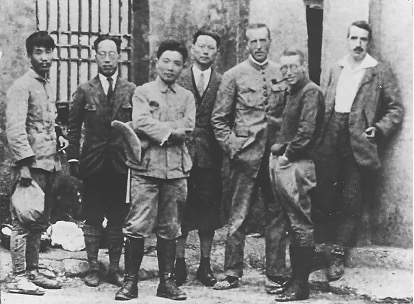
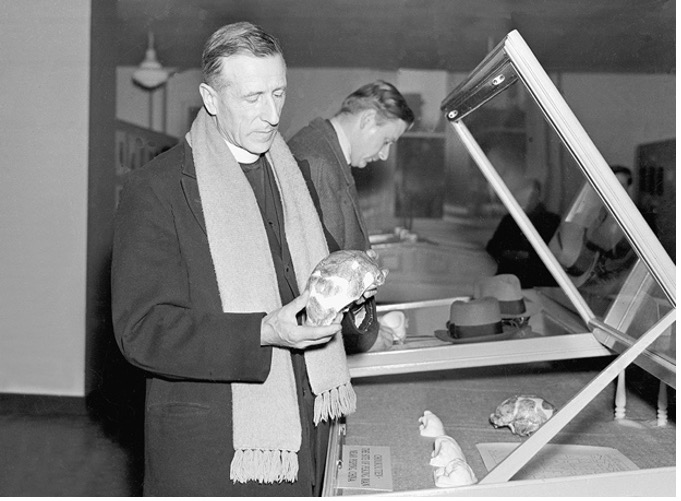
Figure 1 Zhoukoudian Team in 1929 [7]

It was this work on the Peking Man, which Teilhard considered an “awakening”[8] and “the most decisive event of his career”[9] that revealed to him “the presence of God in our lives,”[10] Teilhard’s spiritual perspectives on technology was set aflame.

Figure 2 Teilhard holding a skull of Peking Man (AP Photo)

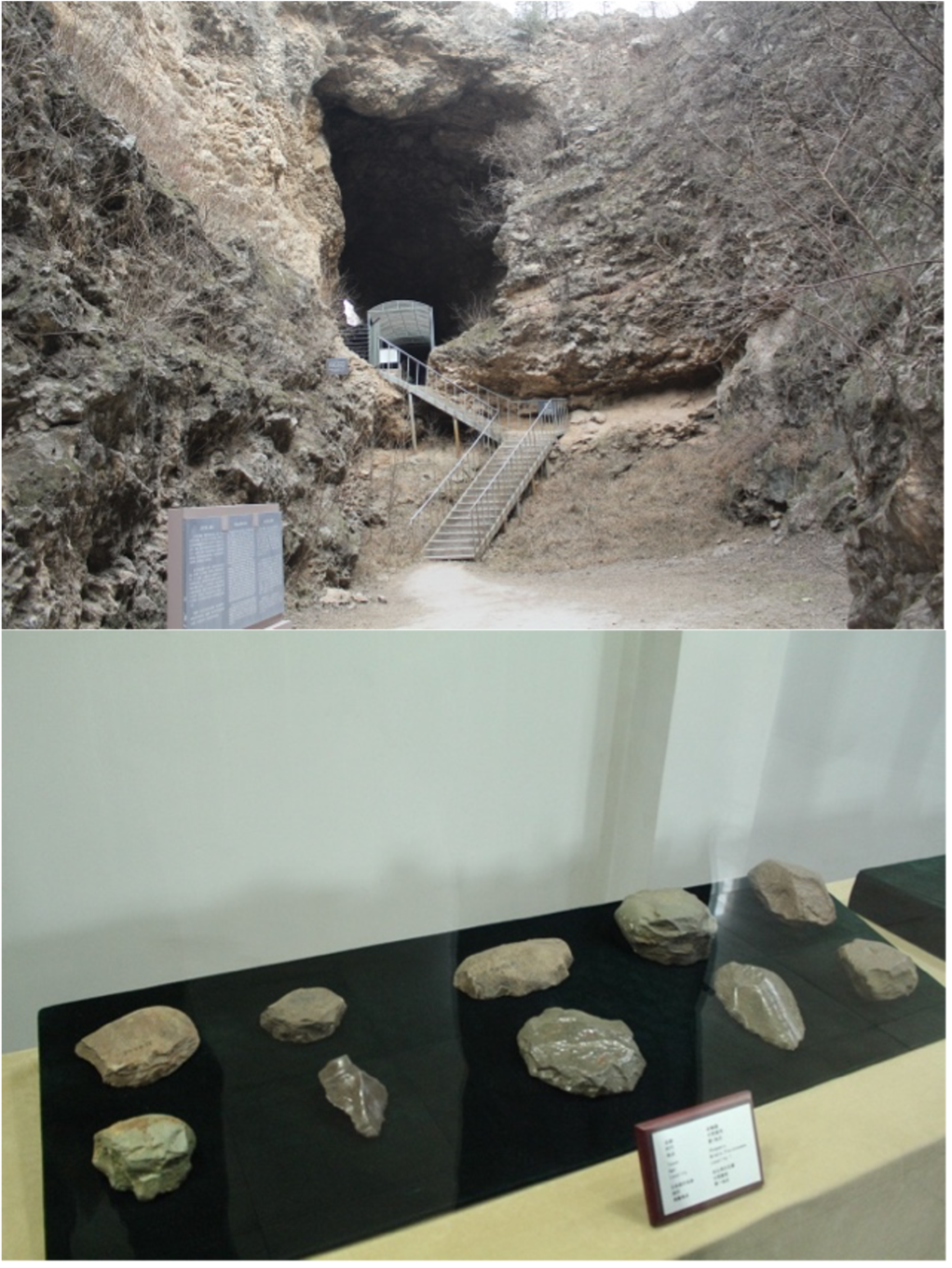
To Teilhard and his Chinese colleagues, the Peking Man and its technology of making stone tools and fire marked the beginning of humanity as homo faber, the toolmaker. Such identification of the Peking Man as the beginning of humanity was one of the major scientific contributions of Teilhard. For Teilhard, this discovery has a particular theological and spiritual dimension, for what he found in the Peking Man is also the creation account of the first human in the book of Genesis as “made in the image of God.” The Peking Man as homo faber reflects the image of the divine maker and the presence of the divine in our lives.

Figure 3 Zhoukoudian, the site where Peking Man was discovered (photo by author) / Figure 4 Stone tools discovered at Zhoukoudian (photo by author)

It is important to note that Teilhard’s insights into humanity and technology cannot be fully understood outside of his work in China and his relationship with Chinese colleagues. Unlike his complex reception in the West, Teilhard’s reputation in China has been unequivocally good. His Chinese name 德日进 given by his Chinese friends and known by Chinese people is found in classical Chinese texts,[11] referring to the sense of sanctity, sagehood, and perpetual virtue. For his Chinese colleagues, Teilhard was the beloved mentor, advisor, and friend, who helped lay the foundation of modern Chinese sciences, especially the disciplinary fields of geology, paleontology, and archeology. More specifically, Teilhard introduced to his Chinese colleagues the employment of modern scientific and technological methods to study archeological remains and artifacts, or, let’s say, ancient technologies. In China, there is no separation between science and technology, quite interestingly, the Chinese term for the current subfield in archeology “scientific archeology” (where AI is now utilized) is in fact “technological archeology,” which Teilhard helped open. Further, Teilhard was one of the pioneers in China for what would later become the field of “environmental archeology,” central to which is the understanding of the interconnectedness between humans and their natural environment.

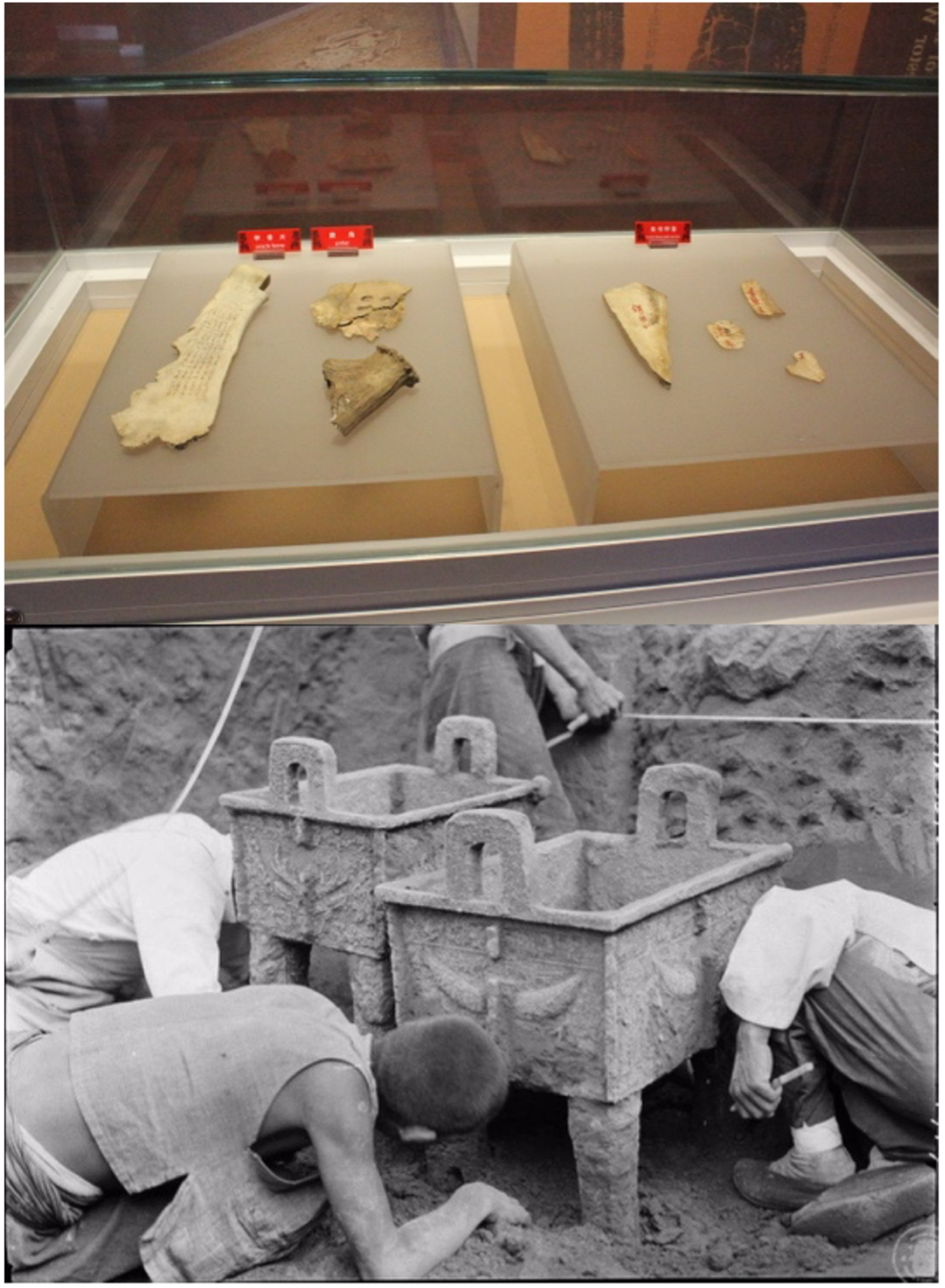
Figure 5 Oracle Bones discovered at Anyang (photo by author) / Figure 6 Excavation at Anyang of Bronze ding vessels in 1934 [12]

Beyond the discovery of Peking Man at Zhoukoudian, Teilhard also worked at some later archeological sites, including Anyang. Anyang was the capital of the Late Shang dynasty (ca. 1250-1046 BCE). With an urban core covering 36 km2, Anyang was one of the largest and most prosperous cities in the ancient world. Teilhard’s collaborative research at Anyang was essential in understanding the fauna found at Anyang in the form of skeletal remains, granting vital insights into human-environment relations in early China. It was also there that Teilhard encountered the ancient wisdom of the Chinese people and their technological innovations of making oracle bones for the purpose of divinization, that is to discern the divine will, and mastering the extremely complex process of producing bronze vessels, which were central in divine worship.

The profound encounter with the immensity of the earth, especially the continent of Asia, and its history revealed through scientific discovery and technological innovation would eventually shape the contours of Teilhard’s Christo-cosmic vision. It is this vision that was taken up by Francis in Laudato si’. Inherent to it is an expansive, wholistic, and coherent understanding of human technology as a communion with God and Creation.

Such understanding is birthed from Teilhard’s work in China in collaboration and solidarity with Chinese colleagues. After spending most of his scientific career working in China, Teilhard arrived at the conclusion that “[t]echnology…has every right to be included in the scheme of nature…there ceases to be any distinction between the artificial and the natural, between technology and life, since all organisms are the result of invention.”[13] Teilhard’s conclusion, seems radical for a contemporary Western eye, brings us to the greatest contributions of Chinese thought and the best fruits of cultural encounters. After all, as a Jesuit in China who formed intimate relationships with Chinese people, what Teilhard embodied is the spirit of Matteo Ricci, Teilhard’s predecessor by three hundred years. The latter forged close friendship and collaboration with Xu Guangqi, who contributed significantly to, among others, the development of mathematics, the calendric system, and agriculture. The most renowned Western historian of Chinese science and technology, Jospeh Needham has revealed to us that historically, the rise of modern science and technology in Europe was closely accompanied by the activities of the Jesuit mission in China with Matteo Ricci as the most influential figure.[14] Many have been preoccupied with the famous Needham Question, “why had modern science originated only in Western Europe soon after the Renaissance?”[15] However, behind it is the other and more important question Needham asked following his undertaking of producing the multivolume Science and Civilization in China, which is “why for fourteen previous centuries had China been more successful than Europe in accumulating scientific knowledge and applying it for human benefit? …could they have contributed something important to the origins of modern science itself?”[16] The answers to these two questions posed in the last century were once settled. However, China’s active construction of an ecological civilization driven by a zest for technological innovation opens new horizons for our contemporary world, one that will provide new insights to Needham’s conclusion that “Chinese culture [and especially its ethical tradition] may have, it seems to me, an invaluable gift to make to the world.”[17]

Thus, the development of modern science and technology is far from a monopoly of the West but already reflects the culture of global encounter that concerns the development of a new eco-technological ethics rooted in the re-invention of ancient traditions. One can hardly deny that our way to the future will need to be paved by this culture of encountering those we have deemed as “the other,” the immense evolutionary process of the earth, and the mystery of the human phenomenon, where technology is not at all an offense against human dignity but a creative expression of life, at once human, cosmic, and divine.

[1] Pontifical Academy for Life; RenAIssance Foundation. Rome Call for AI Ethics: Rome, February 28, 2020. Vatican City: Pontifical Academy for Life, 2020. Accessed November 1, 2025. www.vatican.va/roman_curia/pontifical_academies/acdlife/documents/rc_pont-acd_life_doc_20202228_rome-call-for-ai-ethics_en.pdf

[2] AI Research Group of the Centre for Digital Culture. 2023. “Encountering Artificial Intelligence: Ethical and Anthropological Investigations.” Journal of Moral Theology 1 (Theological Investigations of AI): i–262. doi.org/​10.55476/​001c.91230.

[3] Pope Leo XIV. “Address of the Holy Father to the College of Cardinals (10 May 2025).” Vatican City: Holy See, 10 May 2025. Accessed November 1, 2025. www.vatican.va/content/leo-xiv/en/speeches/2025/may/documents/20250510-collegio-cardinalizio.html

[4] Pope Leo XIV. “Address of His Holiness to the Seminar of Patrimony of Humanity (13 September 2025).” Vatican City: Holy See, 13 September 2025. Accessed November 1, 2025. www.vatican.va/content/leo-xiv/en/speeches/2025/september/documents/20250913-seminario-pat.html

[5] See resources listed on Yale Forum on Religion and Ecology, fore.yale.edu/

[6] Though the positive benefit of technology in environmental protection is often acknowledged, it is by no means the dominant attitude in technological/AI ethics.

[7] Jeanne Mortier and Marie-Louise Aboux, Teilhard de Chardin Album (New York: Harper & Row, 1966), 88.

[8] Pierre Teilhard de Chardin, The Heart of Matter, trans. René Hague (New York: Harcourt Brace Jovanovich, 1978), 153.

[9] Teilhard, “The Scientific Career of Pierre Teilhard de Chardin,” 154.

[10] Ursula King, Spirit of Fire: The Life and Vision of Pierre Teilhard de Chardin (Maryknoll, NY: Orbis Books, 1996), 135.

[11] Zhu Xi (朱熹), Lunyu Jizhu 论语集注 [Collected Commentaries on the Analects] (Beijing: Zhonghua Shuju, 1983).

[12] “殷墟发掘:尘封三千年的商王朝重现人间 [Yinxu Excavation: The Shang Dynasty Reappears After Three Thousand Years],” Sohu History, May 30, 2022, history.sohu.com/a/554506708_121123711

[13] Pierre Teilhard de Chardin, “The Place of Technology,” in The Activation of Energy, trans. René Hague (New York: Harcourt, 1971), 159

[14] Joseph Needham, “The Roles of Europe and China in the Evolution of Oecumenical Science,” in A Selection from the Writings of Joseph Needham, ed. Mansel Davies (New York: McFarland, 1990), 247.

[15] Joseph Needham, “History and Human Values: A Chinese Perspective for World Science and Technology,” in A Selection from the Writings of Joseph Needham, ed. Mansel Davies (New York: McFarland, 1990), 55.

[16] Joseph Needham, “An Eastern Perspective on Western Anti-Science,” in A Selection from the Writings of Joseph Needham, ed. Mansel Davies (New York: McFarland, 1990), 253.

[17] Needham, “An Eastern Perspective on Western Anti-Science,” 258.